.png)
A Complete Buyer's Guide | Blue Ridge Georgia | 2026
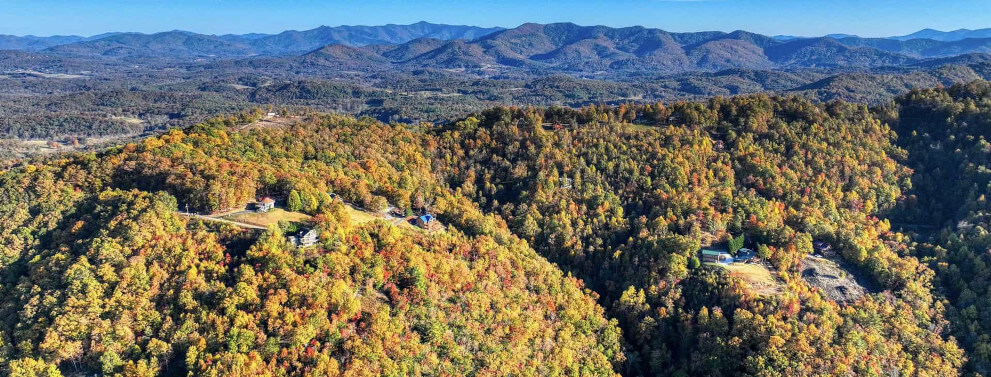
 If you’re sitting at home right now somewhere two states away — daydreaming about what it would be like to have a place up in the North Georgia mountains, a getaway, a future retirement spot, maybe a cabin you could rent out as a short-term rental — this guide is for you. There’s a handful of things most folks get wrong about Blue Ridge before they ever drive into Fannin County, and after fifty-some years up here, I want to make sure you’re not one of them.
I’m Chad Lariscy, owner and team leader of The Mountain Life Real Estate Team. I want to be straight with you up front — I didn’t move here. I was raised in downtown Blue Ridge. I’ve spent fifty of my fifty-five years on this earth in these mountains. Over the last twenty-plus years, my team and I have helped thousands of families find their own piece of it.
This is the written companion to Episode 1 of The Mountain Life Field Guide — the YouTube series I built for the kind of buyer most of my clients actually are. Not somebody packing a U-Haul to relocate for a job, but somebody dreaming for years about the right place up here. Read on for what Blue Ridge actually feels like, the communities you’ll want to know about, what it really costs to live here, and the truth on what nobody else will tell you.
I didn’t move here. I was raised here. I have spent my entire life in these mountains.
What Living In Blue Ridge, GA Actually Feels Like
People come up here looking at mountain homes or cabins. But what they’re really buying isn’t a dwelling.
What they’re really buying is what 6 a.m. feels like on the porch when the fog hasn’t lifted yet — that quiet you can almost reach out and touch, and the way the mountains hold the morning still until the sun finally gets to work. They’re buying what 8 p.m. sounds like when there’s no traffic noise. None. They’re buying the wave from a stranger at the four-way stop downtown. The way a Tuesday afternoon in October smells when the wood smoke from somebody’s first fire of the season starts drifting through the air.
I had a family come up a couple years back — couple from outside Atlanta, two kids in elementary school. They came up looking at three-bedroom cabins. Standard search. By the end of that weekend, they weren’t talking about square footage anymore. They were sitting on the porch of the rental cabin watching their kids run barefoot through the grass, and the dad looked over at me and said, “They’ve been outside for nine straight hours. They never do that at home.”
That’s the thing.
The house comes second. The life up here comes first. And once you understand that, the whole search starts to make a different kind of sense. You stop looking for the perfect kitchen island and start looking for the porch where your kids will eat dinner barefoot in October. You stop counting bedrooms and start counting how many neighbors waved at you on the drive in.
That’s what people are actually buying when they buy in Blue Ridge.
The Communities of Fannin County
Let me clear up something before we go any further, because most folks looking up here get it backwards.
Fannin County actually has three incorporated cities — Blue Ridge, McCaysville, and Morganton — each with its own mayor and city council. The other names you’ll hear when you start looking up here — Mineral Bluff, Epworth — are unincorporated communities. Post office, zip code, maybe a Dollar General now, but no city government. It matters because once you know the difference, you start hearing this place the way locals do.
I’ll also pass along the pronunciations as we go. Some of these will trip you up. I’d rather you sound like a local before you ever get here.
Blue Ridge is the front door. Walkable downtown, the Blue Ridge Scenic Railway, restaurants, more shops than you’d expect for a town its size. Most folks land here first because it’s the name they’ve heard. If you want a place that feels alive — and you don’t mind tourist traffic on a Saturday in October — Blue Ridge is where you start.
Mineral Bluff — pronounced MIN-er-al Bluff, just like it looks — is just up the road from Blue Ridge and feels twenty years quieter. River-front property in spots, more cabins tucked back in the trees, and less foot traffic than downtown Blue Ridge. If you want privacy and a creek running close by, Mineral Bluff is worth the look.
Morganton is technically its own little city — has a mayor and council and the whole bit — but it’s small enough and quiet enough that most folks treat it like a community anyway. Sits close to Lake Blue Ridge, tucked away, and a little more affordable than properties closer to downtown. Pronunciation here is its own thing: locals say MORE-gun-ton, but you’ll hear plenty of folks call it Morgan-town — both are fine. Well… no, not really. The town-ton swap is just an affectionate local quirk we all chuckle at. If you want lake access without the Blue Ridge price tag, Morganton is where I’d be looking. But then again — who am I kidding? It is Lake Blue Ridge.
Epworth — Epp-Worth, two syllables — is the smallest of the bunch. Quiet country pocket north of Blue Ridge, near McCaysville. Mostly land, more privacy still, and not a lot of through-traffic. Folks who want something genuinely off the beaten path tend to land in Epworth.
There’s one more name worth knowing if you’re shopping the broader Blue Ridge area: Suches. Suches technically lives over in Union County, near Blairsville, but Fannin folks treat it as neighbor territory and a lot of buyers who consider Blue Ridge also consider Suches. Pronunciation matters here, because most outsiders get this one wrong. It’s SUCH-is, not SOO-chess. If you ever hear somebody at the hardware store say SOO-chess, you’ll know they’re new.
Blue Ridge is a town. The rest are communities. Once you know the difference, you start hearing this place the way locals do.
A few names you might be wondering about aren't on this list, and the why-not is worth knowing.
McCaysville isn't here, even though it's in Fannin County too — that's because McCaysville is its own actual town with its own government, sitting right on the Tennessee state line. The GA/TN twin-town story (McCaysville on one side of the Toccoa River, Copperhill, TN on the other) is big enough for its own dedicated guide. Episode 2 of the Field Guide series covers it.
Cherry Log isn't here either — and Cherry Log, honestly, is its own special situation. Most of it lives in Gilmer County, which is why it gets covered in the Ellijay episode (Episode 3). But here's where it gets fun: in recent years, some Cherry Log property that sits clearly in Gilmer has been annexed into Blue Ridge with a 30513 zip code. And some land down in Fannin County — toward Black Ankle and Big Creek — somehow ended up with a Cherry Log mailing address with a 30522 zip code. Which, I'll be honest, makes no sense at all. If your future place sits anywhere near Cherry Log, expect a "wait, what county am I actually in?" moment. We'll sort it out when you get there.
Ellijay itself is its own thing — its own county, its own market, its own dedicated post.
Each one gets treated right.
The Water — Lake Blue Ridge And The Toccoa River
Now the water. Because for a lot of you, this is the dream — water out the back door.
In the Blue Ridge area, you’ve got two main options, and they’re not the same thing.
Lake Blue Ridge is the closest, the prettiest in my opinion, and the most popular. Crystal water, lined by mountains, less developed than the lakes you might be picturing in your head. Boat slip access matters here, and it’s tighter than it used to be — if a property comes with a deeded slip, that’s a real value. Most lakefront properties on Lake Blue Ridge are in the higher price tiers, but there’s plenty of “lake-view” and “near-lake” inventory at meaningfully lower numbers.
And then there’s the Toccoa River. That’s pronounced TAH-ko-AH — three syllables, stress on the first and the last. Not the way most outsiders try to say it. The Toccoa flows right through Blue Ridge and McCaysville on its way to becoming the Ocoee River when it crosses into Tennessee. River-front in this market doesn’t get talked about as much as the lake, but for a lot of folks it’s actually the better fit. If you want flowing water out your back door instead of a flat lake — the sound of it, the rhythm of it — the Toccoa is where you look. River-front is a different lifestyle than lake-front entirely.
The North Georgia mountains have three other major lakes worth knowing about, even though they’re not in Fannin County. Quick pronunciation pass: Nottely — locals say Not-Lee. Chatuge — SHA-toog if you sound like a local, CHA-too-gee if you sound like a visitor; both are fine. Hiwassee — HI-WAH-see, and yes, that’s different from the town of Hiawassee, HI-uh-WAH-see, which has the extra syllable. Lake and town are two different places.
Lake Nottely is the Blairsville story (covered in Episode 3). Lake Chatuge is the Hiawassee/Hayesville story across the Georgia/North Carolina line (covered in Episode 5). Lake Hiwassee is part of Murphy on the NC side (covered in Episode 6). And we’ll do a full lakes-compared deep dive later in the series.
For Blue Ridge specifically, the water is Lake Blue Ridge and the Toccoa. Both beautiful. Both different lifestyles. Come up. See both.
What It Really Costs To Live In Blue Ridge
Now the part nobody else will talk straight about. What does it actually cost to live in Blue Ridge?
Property taxes are the surprise for most folks. They’re very low compared to where you’re probably coming from — roughly $400 - $760 per $100K of value, depending on whether you’re inside Blue Ridge city limits or out in the county. That’s a fraction of what most folks pay in metro Atlanta, Charlotte, or anywhere in Florida or Texas. Fannin County doesn’t have a state income tax separate from Georgia’s, and Georgia’s homestead exemption for primary residences and senior citizens makes the effective rate even lower for many buyers.
Home prices sort into three buckets in this market.
Around $400K - $600K gets you a starter cabin that needs some love — possibly a fixer in a quieter community like Epworth, or an older property without lake views or river frontage. $650K - $900K gets you a comfortable mid-range mountain home — well-maintained, three or four bedrooms, mountain views or wooded privacy, possibly a creek or access to the river or lake in a desirable Fannin County pocket. $1.2M and up starts the river-front and lake-front conversation. Premium long-range views, deeded boat slips, larger acreage — those are the properties on the upper end of the local market.
Then there are the costs nobody warns you about — and these matter more for getaway and second-home buyers than the price-per-square-foot conversation usually allows.
Generators. Power can flicker in storms up here. A whole-home generator is standard for full-time residents and increasingly common for second homes. Budget for the install plus annual service.
Wells and septic. Most properties outside the immediate Blue Ridge city limits run on a private well and a septic system rather than municipal water and sewer. Both work fine when maintained, but you should know what you’re buying — well pumps last 10–15 years, septic systems need pumping every 3–5 years.
Road maintenance. If your property is on a private mountain road (a lot of them are), there’s typically a road maintenance fee or shared HOA arrangement. Important to confirm during your due-diligence period.
Insurance. Mountain properties run higher than urban for fire, wind, and access reasons. Not back-breaking, but plan for it.
The cost of being up here is less than you think. The ownership of being up here comes with things you don’t deal with in a subdivision. Both are true.
The honest truth: for most folks, the cost of being up here is less than you think. The ownership of being up here comes with things you don’t deal with in a subdivision. Both are true. You should know both before you sign.
For a deeper dive on cost specifics across all six Field Guide regions, Episode 7 — The Real Cost of Living in the North Georgia Mountains — gets into the numbers county by county.
Common Myths About Living In The North Georgia Mountains
Three things people get wrong before they ever come up.
One — they think we’re snowed in all winter. We’re not. Blue Ridge gets snow a few days a year. It’s beautiful when it happens and the kids love it. But the idea that you can’t get out of your driveway from December through March is just wrong. December through March up here is some of the best weather you’ll get — cool, clear, and the trees show their bones. Don’t let the snow myth scare you off.
Two — they think it’s all cabins. It’s not. Yes, we’ve got cabins — and great ones. But we’ve also got mountain modern homes, lakefront contemporary, traditional architecture, log homes, and even some farmhouse stuff in the surrounding communities. The cabin thing is what the marketing photos always show because cabins photograph well. The actual housing stock up here is wider than that, and you should look at the full inventory, not just what shows up on the first page of search results.
Three — they think there’s nothing to do. I’ve lived here fifty-some years, and I still don’t run out of things to do. Hiking trails everyone knows about, and ones nobody does. The Toccoa River for fly-fishing, kayaking, and tubing. Lake Blue Ridge for boating and dock days. Distilleries within a short drive. The Blue Ridge Scenic Railway. Wineries thirty minutes away in Ellijay. Football season at Fannin County High School — small-town Friday nights are a thing here. We’ve got our pace. We’re not bored.
Who Blue Ridge Isn’t For
And while we’re being honest — let me tell you who Blue Ridge is not for. Because not everybody belongs up here, and I’d rather tell you that now than have you find out three months after you’ve signed.
If you need a Whole Foods five minutes from your house, you’re going to be frustrated. We have grocery stores. They’re not Whole Foods.
If you hate winding two-lane roads, especially in the rain, this’ll wear on you. Most of the access roads to mountain properties are narrow, curvy, and elevation-changing. It’s part of what makes the views possible. It’s also part of what makes the drive home longer than the GPS estimate.
If you need a five-minute commute, lots of nightlife, or you can’t sit still on a quiet evening, the mountains are going to feel slow.
That’s okay. Not everybody belongs up here. Knowing it now saves both of us a lot of trouble.
How to Pronounce These Names Like a Local
If you’re going to spend any time in the North Georgia mountains, here’s how locals actually pronounce the names that trip outsiders up. Save this section. Send it to your spouse.
- Blue Ridge — Blue Ridge. This one is just like it sounds. You’re fine.
- Mineral Bluff — MIN-er-al Bluff. Just like it looks.
- Morganton — MORE-gun-ton. Locals also affectionately call it Morgan-town. Both work.
- Epworth — Epp-Worth. Two syllables, exactly how it looks.
- Suches — SUCH-is. Not SOO-chess. If you say SOO-chess at the hardware store, you’ll know what a polite Georgia stare looks like.
- Toccoa — TAH-ko-AH. Three syllables. Stress on the first and the last. Not toh-KOH-uh like outsiders try.
- Ellijay — EL-uh-jay. Three quick syllables. Not EEE-Lie-juh like a Bible character. (Yes, people call in saying it that way.)
- Hiawassee vs Hiwassee — these are two different places and they’re pronounced differently. The town of Hiawassee in Towns County is HI-uh-WAH-see (four syllables). The lake of Hiwassee — different spelling — is HI-WAH-see (three syllables, drops one).
- Lake Chatuge — SHA-toog if you sound like a local; CHA-too-gee if you sound like a visitor. Both work, actually not!
- Lake Nottely — Not-Lee if you’re a local. The full version is NOT-tah-Lee but locals shorten it.
- Brasstown Bald — Buh-rass-town Baw-lud. Two syllables on Bald, locally.
Frequently Asked Questions
What’s the cost of living in Blue Ridge, GA?
Cost of living in Blue Ridge is meaningfully lower than metro Atlanta or any Florida city of similar size. Property taxes run lower than most metro markets, and Georgia’s homestead exemption for primary residences and senior citizens reduces the effective rate further for qualifying buyers. The biggest hidden costs in this market are generators, well-pump maintenance, septic systems, and road maintenance on private mountain roads.
How is the weather in Blue Ridge in winter?
Mild compared to what most folks expect. Snow falls a handful of days per year — beautiful when it happens but rarely enough to keep you home. Daytime highs in winter typically range from the 40s to the 60s, with occasional cold snaps into the 20s and 30s overnight. Most winters you can get in and out of your driveway every day.
Do most properties in Blue Ridge come with lake or river access?
No. Most do not. The properties with deeded boat slips, direct lake frontage, or river frontage are the upper end of the market. There’s plenty of inventory in the “lake-view,” “near-lake,” “wooded privacy,” and “long-range mountain view” categories at meaningfully lower price points.
Is Blue Ridge a good place for a short-term rental investment?
It can be, but you have to know what you’re buying. Blue Ridge has a strong tourism economy that supports STR demand, especially around Lake Blue Ridge and the Toccoa River. But STR rules vary by county and even by community within Fannin, so always confirm with the property’s specific zoning and any HOA covenants before you make an offer. Episode 11 of the Field Guide goes into the STR details county by county.
Is Blue Ridge a year-round community or mostly seasonal?
Both. Blue Ridge has a strong year-round population — folks who live here full time, raise kids here, run businesses here. It also has a heavy seasonal component during October leaf season, summer lake months, and holiday weekends. The mix is part of what keeps the local economy strong.
What’s the difference between Blue Ridge and Ellijay, GA?
Both are popular North Georgia mountain towns about 20 minutes apart, but they have different identities. Blue Ridge is more walkable downtown with the Blue Ridge Scenic Railway and a tourism-focused main street. Ellijay is apple country with more of an agricultural feel, more wineries, and (in some pockets) more affordable real estate. The Field Guide covers Ellijay in detail in Episode 3.
How far is Blue Ridge from Atlanta?
About 90 minutes from north Atlanta in good traffic, closer to two hours from the heart of the metro. Most weekend buyers come up Friday evenings and head back Sunday afternoons.
Should I buy in Blue Ridge city limits or out in the county?
Depends on what you want. In-city properties have municipal water and sewer, faster emergency response, and walking access to downtown. County properties tend to have larger acreage, more privacy, and (often) lower price-per-acre, but they require well, septic, and a longer drive to anything. Most of my Blue Ridge buyers end up out in the county for the privacy.
Continue Your Field Guide Reading
- Moving to McCaysville, GA: A Complete Buyer’s Guide — The Tennessee twin-town just north of Blue Ridge, with the Blue Ridge Scenic Railway terminus and a different kind of small-town life.
- Moving to Ellijay, GA: A Complete Buyer’s Guide — The Gilmer County alternative to Blue Ridge, with apple country, wineries, and (in spots) more affordable inventory.
- The Real Cost of Living in the North Georgia Mountains — Numbers, by county, across all six Field Guide regions. The deeper version of this post’s cost section.
When You’re Ready
If you’re a year or two out from looking, get on my list — I’ll send you the next Field Guide and check in once a quarter. If you’re closer than that, fill out the form below and it goes straight to my desk. No pressure, no funnel. Just my team and me, ready when you are.
Chad Lariscy — Owner & Team Leader, The Mountain Life Real Estate Team. Raised in Blue Ridge, GA — my entire life has been in the North Georgia mountains. Licensed real estate agent in Georgia and North Carolina; Tennessee in progress.

.png)

Footer Social Links